For many people, meditation sounds appealing right up until the moment they actually try it. They sit down, close their eyes, and discover that their mind is louder than ever. Thoughts race. To-do lists reappear. Old conversations come back. Small worries suddenly feel enormous. Instead of calm, they meet noise.
This is often the exact point where beginners assume they are “bad” at meditation. In reality, nothing has gone wrong. You are not failing. You are simply noticing the mind more clearly than usual.
Meditation is not about becoming someone with no thoughts. It is about learning how to sit beside those thoughts without being pulled around by every one of them. That shift takes practice, patience, and a gentler understanding of what meditation is actually for.
The First Myth to Let Go Of
One of the most common misconceptions is that meditation should feel instantly peaceful. Sometimes it does. Often, it does not. The first few minutes can feel restless precisely because you have stopped distracting yourself. The mind, which is usually busy reacting, scrolling, planning, and consuming, suddenly has room to show its habits.
This can be uncomfortable, but it is also useful. What rises in silence often reveals what has been running quietly in the background all day. Meditation does not create chaos. It simply makes inner movement easier to see.
Start Smaller Than You Think
Many beginners make the process harder by aiming too high. They decide they will meditate for twenty or thirty minutes, create an elaborate ritual, and transform their life by next week. Most of the time, that approach creates pressure rather than calm.
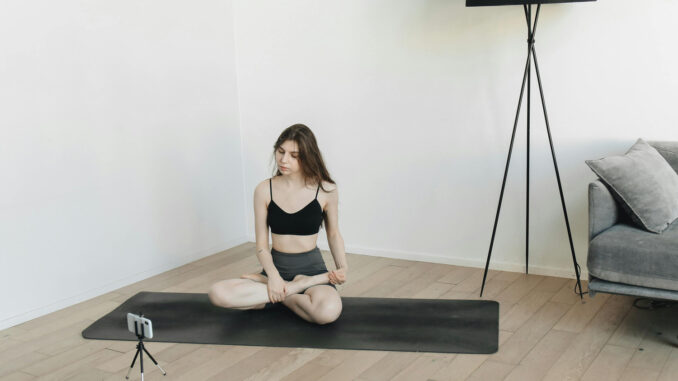
A better beginning is far smaller. Start with just three minutes. Sit somewhere reasonably comfortable. Let your hands rest. Keep your posture natural. You do not need to look spiritual. You do not need to force a perfect position. You only need to stay still long enough to notice your breath.
Three minutes is enough to begin a relationship with stillness. It is short enough to feel possible, and that matters more than intensity. A simple practice you can return to is far more powerful than an ideal version you avoid.
Use the Breath as an Anchor
When the mind feels busy, the breath gives you something steady to return to. You do not need to breathe in a special way. Just notice it. Feel the inhale enter. Feel the exhale leave. Pay attention to one place where the breath is easy to sense, such as the nose, the chest, or the stomach.
Thoughts will interrupt. That is normal. The practice is not to stop them by force. The practice is to notice that your attention has drifted and then return, quietly, to the breath.
That return is the heart of meditation. Not the perfect focus. Not the empty mind. The return.
What to Do When Thoughts Keep Coming
If thoughts keep arriving, try naming them softly without judgment. You might notice “planning,” “remembering,” “worrying,” or “rehearsing.” This small act creates a little space between you and the thought. It reminds you that a thought is something passing through awareness, not an instruction you must follow immediately.
After naming it, return to the breath. Again and again if needed. Some sessions will feel scattered. Some will feel calm. Both still count.
Meditation becomes gentler when you stop measuring each session by how peaceful it felt and start valuing the fact that you showed up at all.
Make It Easy to Repeat
The best meditation habit is the one that fits naturally into your life. That may mean sitting for three minutes in the morning before checking your phone. It may mean taking five quiet minutes after work. It may mean ending the evening with a short breathing practice before bed.
Consistency matters more than creating the “perfect” setting. You do not need candles, special music, or a dedicated room. Those things can be pleasant, but they are optional. What matters is repetition. The mind learns through returning.
A Simpler Way to Think About Progress
Progress in meditation is often subtle. It may show up as a calmer response during a stressful moment. It may appear as a little more patience, a little less reactivity, or a slightly wider pause before you get pulled into the day’s noise.
These changes are easy to miss because they are quiet. But they matter. Meditation does not always announce itself dramatically. Sometimes it works by softening the edges of daily life.
If your mind will not slow down, that does not mean meditation is not for you. It may mean meditation is exactly what you need — not to erase your thoughts, but to change your relationship with them.
Begin Here
Sit down today for three minutes. Notice one breath. Then the next. When the mind wanders, return. No drama. No criticism. No need to be impressive.
Calm does not always arrive all at once. Sometimes it begins as a quieter way of meeting yourself.