The way a day ends has a quiet influence on how the mind carries it forward. Many people move straight from stimulation into exhaustion without any real pause in between. Screens stay on late. Thoughts continue circling. The body is tired, but the mind is still active. Sleep becomes something to chase rather than something to ease into naturally.
This is one reason a short evening meditation can be so valuable. It does not need to be long or elaborate. Even a few quiet minutes before bed can help create a softer transition between the noise of the day and the stillness of the night.
An evening practice is not about performing calm perfectly. It is about giving the nervous system a gentler place to land.
Why the Mind Often Feels Busy at Night
During the day, constant tasks and distractions can keep deeper mental noise in the background. Once evening arrives and external demands begin to reduce, thoughts that were pushed aside often return. Plans for tomorrow appear. Unfinished conversations replay. Small worries suddenly seem louder in the quiet.
This is not unusual. Night can make the mind feel more exposed because there is finally space to notice what has been building underneath the day’s momentum.
A short meditation does not guarantee that every thought disappears. What it can do is change the atmosphere in which those thoughts are met. Instead of continuing to chase them, you begin to sit beside them with a little more steadiness.
A Different Kind of Ending
Many bedtime routines focus only on what to remove, such as less screen time or less stimulation. Those things can help, but it is also useful to add something restorative. A short meditation offers a positive ritual rather than just a restriction.
It can become a signal that the day is over. Not every task is complete, not every feeling is resolved, and not every thought has been answered, but the mind no longer needs to keep working in the same way. For a few minutes, you allow yourself to step out of constant engagement.
That kind of ending can make the evening feel less abrupt and more intentional.
What a Short Evening Practice Can Look Like
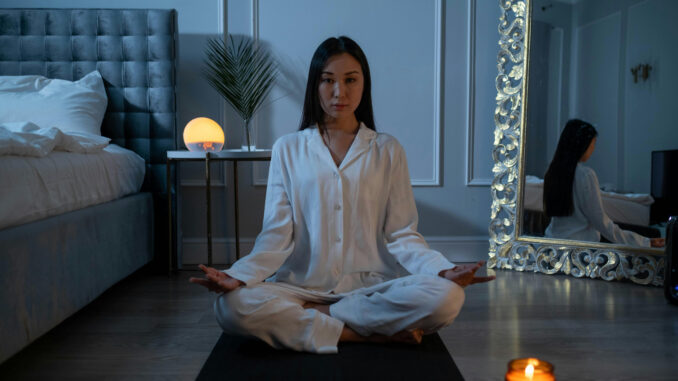
The beauty of an evening meditation is that it can be extremely simple. Sit somewhere comfortable. Let your shoulders drop. Notice the breath without trying to force it. If the body feels tight, exhale a little more slowly than usual. Let the pace of attention follow the pace of breathing.
Some people prefer to keep the eyes closed. Others feel more settled with a soft downward gaze. There is no need to perform the practice in a rigid way. The aim is not perfection. The aim is softening.
If thoughts arrive in waves, let them. Notice them and return to the breath. If emotions from the day rise up, meet them without trying to solve everything at once. A few quiet minutes can be enough to reduce the feeling of being carried by the day’s unfinished energy.
The Benefits Are Often Subtle
One reason people undervalue short evening meditation is that the benefits can be understated. You may not feel dramatically transformed after five minutes. But the mind may feel a little less crowded. The body may soften slightly. The urge to keep scrolling or mentally rehearsing may lose some of its force.
These quiet shifts matter. Evening practices often work not by creating a grand experience, but by lowering the emotional volume before sleep. Over time, that can shape how restful the end of the day feels.
For a simple and beginner-friendly introduction to meditation, the NHS guide to meditating for beginners offers a practical overview of how meditation can support calm, focus, and mental wellbeing.
A Better Relationship With Unfinished Thoughts
Evenings often feel difficult because the mind wants closure that life rarely provides. There is always something left unresolved, undone, or uncertain. Meditation does not manufacture perfect closure, but it can help loosen the belief that every thought must be settled before rest is allowed.
This is one of its gentler gifts. You begin to realize that rest does not need to be earned by total mental completion. You can pause even with unfinished things in the background. You can breathe even while some questions remain unanswered.
That shift can be deeply relieving, especially for people whose minds tend to stay active late into the night.
Build a Ritual, Not a Test
A short meditation before bed works best when it feels like a ritual rather than a test. You do not need to judge whether the session was deep enough or calm enough. You only need to create a repeatable moment of quiet.
That might mean three minutes in the same chair each night. It might mean five slow breaths before getting into bed. It might mean closing the laptop, dimming the lights, and giving yourself one final pause before sleep.
The more gently this ritual is held, the more likely it is to last. Evening calm grows more easily from kindness than from pressure.
Let the Day End Softly
Not every day ends beautifully. Some days are messy, mentally loud, or emotionally unfinished. A short meditation does not erase that reality, but it can help you meet it with less friction. It offers a softer edge to the night.
In the end, that may be one of the quietest benefits of all. You stop demanding that the mind switch off instantly and start giving it a calmer path toward rest.
Sit down for a few minutes tonight. Breathe. Let the day loosen its grip a little. That may be enough.